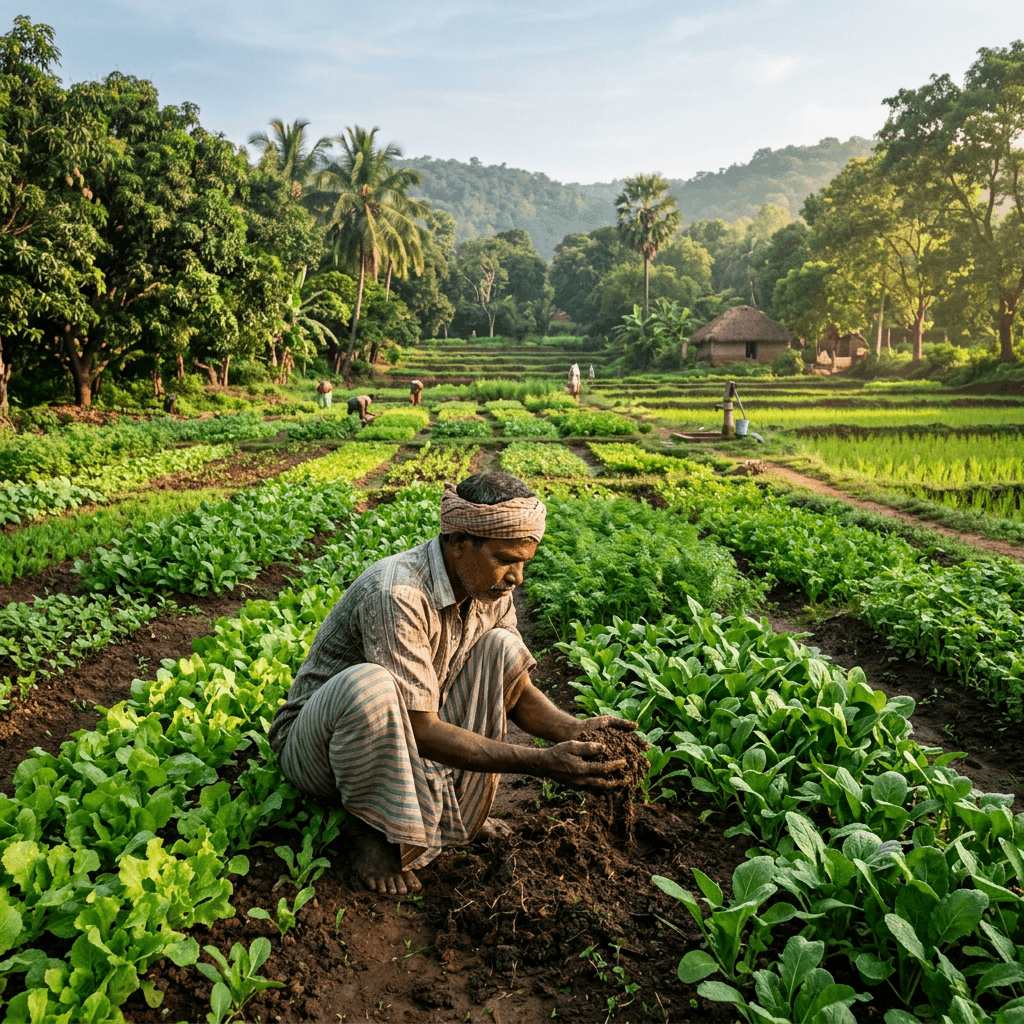
Circular Farming: A Sustainable Practice
This initiative transitions smallholder farmers from chemical-intensive practices to sustainable, organic farming by implementing non-chemical pest management and bio-fertilizers. By training communities in water harvesting and soil conservation, we reduce cultivation costs and increase crop diversity, successfully improving soil organic carbon levels and decreasing dependency on expensive external inputs to ensure long-term food security and environmental resilience.
Year
2025
Domain
Sustainable Agriculture
SDG COVERED
2, 12 & 13
Date Updated
Subject Area as per ICSSR List
This project promotes Circular Economy concepts for Sustainable Practice, which encompasses various interdependent components such as land, cattle, farm pond & fish, and honeybee. The key methods followed involves the below:
1. Usage of farm pond to store and treat water before using it for micro-irrigation
2. Usage of cow excreta for manure, vermicomposting, and cooking gas
3. Usage of a small patch of land to grow green fodder for cattle
4. Extracting of oil from oilseed, and usage of the cake so formed (mustard, peanut etc.) for making cattle feed, fish feed and organic fertilizer
5. Usage of the tree shade areas for honeybee farming which in turn will benefit pollination
In addition to the initiatives already taken, there are other transformative components which DEFT has in its pipeline. This involves solar fencing to dissuade trespassing of animals, and solar power to complement utility power.